
Project Summary/Scope:
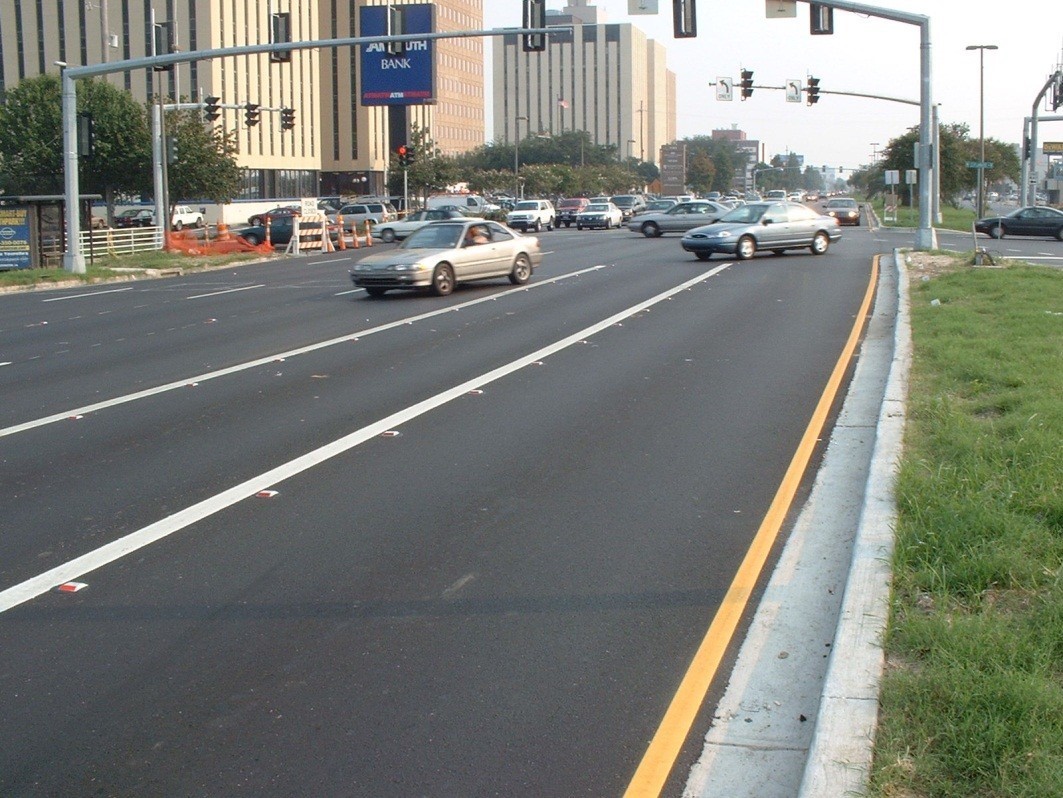
In 2002, the pavement condition from I-10 to the beginning of the Lake Pontchartrain causeway had deteriorated significantly over many years and was in need of rehabilitation. The pavement surface was exhibiting a great deal of transverse and longitudinal cracking distress as a result of the many years of heavy traffic volume and loading. Given the high daily traffic volume combined with the severe cracking, long lane closures would be necessary to carry out full depth rehabilitation. Although this would restore the road’s base strength to handle both current and future traffic loadings, there was no reasonable way to reroute the traffic for lane closures.
After years of exposure to the sun, the asphalt had oxidized and become quite brittle resulting in large concentration of cracking throughout the pavement section.
A pavement interlayer, the GlasGrid® Pavement Reinforcement System, along with a slightly modified “mill and fill” approach was selected as a lower cost alternative to reconstruction. Reinforcing the pavement with the fiberglass-based interlayer provided the asphalt with a much greater ability to resists tensile stresses in the pavement. Approximately 3” of the existing pavement was milled off to accommodate the 1.5” leveling course and a 1.75” overlay. This particular interlayer comes with a high quality pressure sensitive adhesive that provided the bond to the new leveling course and permitted the construction traffic to proceed without any delays. The installation crew placed the interlayer immediately ahead of the paving crew. This limited the work to one lane, permitting traffic to travel passed the paving and installation crews with minimal disruption to the flow.
Complementary Technologies Used: Slightly modified Mill and Fill approach.
Alternate Technologies:
The level of distress was significant, and this led to the rejection of a simple mill and fill (3”-6”) strategy fearing the cracking would reflect through soon after the overlay was installed. Other options such as, full depth reconstruction, would require long lane closures and much higher construction costs.
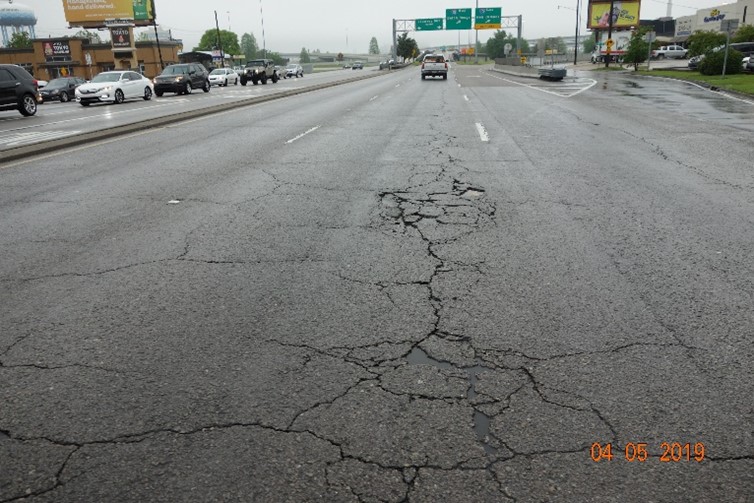
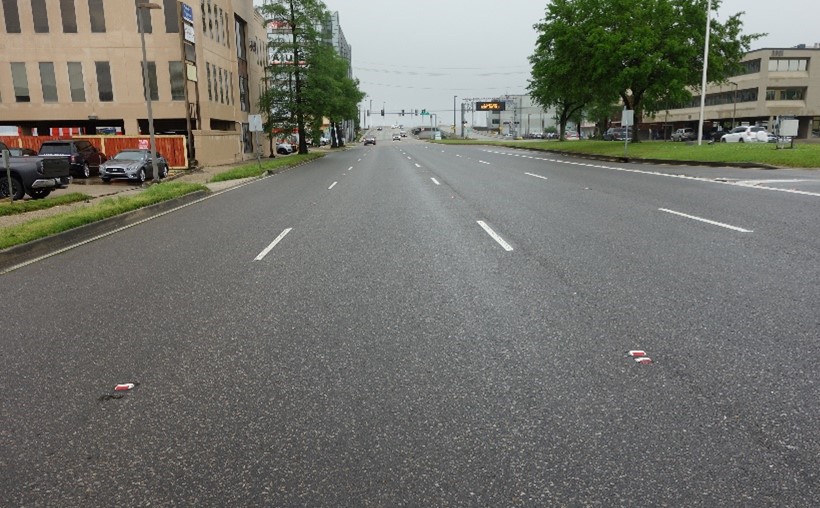
Performance Monitoring: Over the last 17 years, this 1.5-mile section has performed extremely well and remains essentially crack free, even through significant weather events such as Hurricane Katrina in 2005. Although a few small cracks can be found in the area immediately next to the curb, the main travel section areas are crack free. Over the same time period, the section of N. Causeway Blvd that is located south of Veterans was rehabilitated without the interlayer and is demonstrating a large degree of cracking. This section will soon need to be rehabilitated.
Cost Information: Reduced maintenance costs such as repaving.
Case History Author/Submitter: Jeff Rasche, Tensar Industry Manager – Interlayers and Pavement Maintenance.
Project Technical Paper: N/A
Date Case History Prepared: 2020
Case History Prepared By: Katie Phillips